
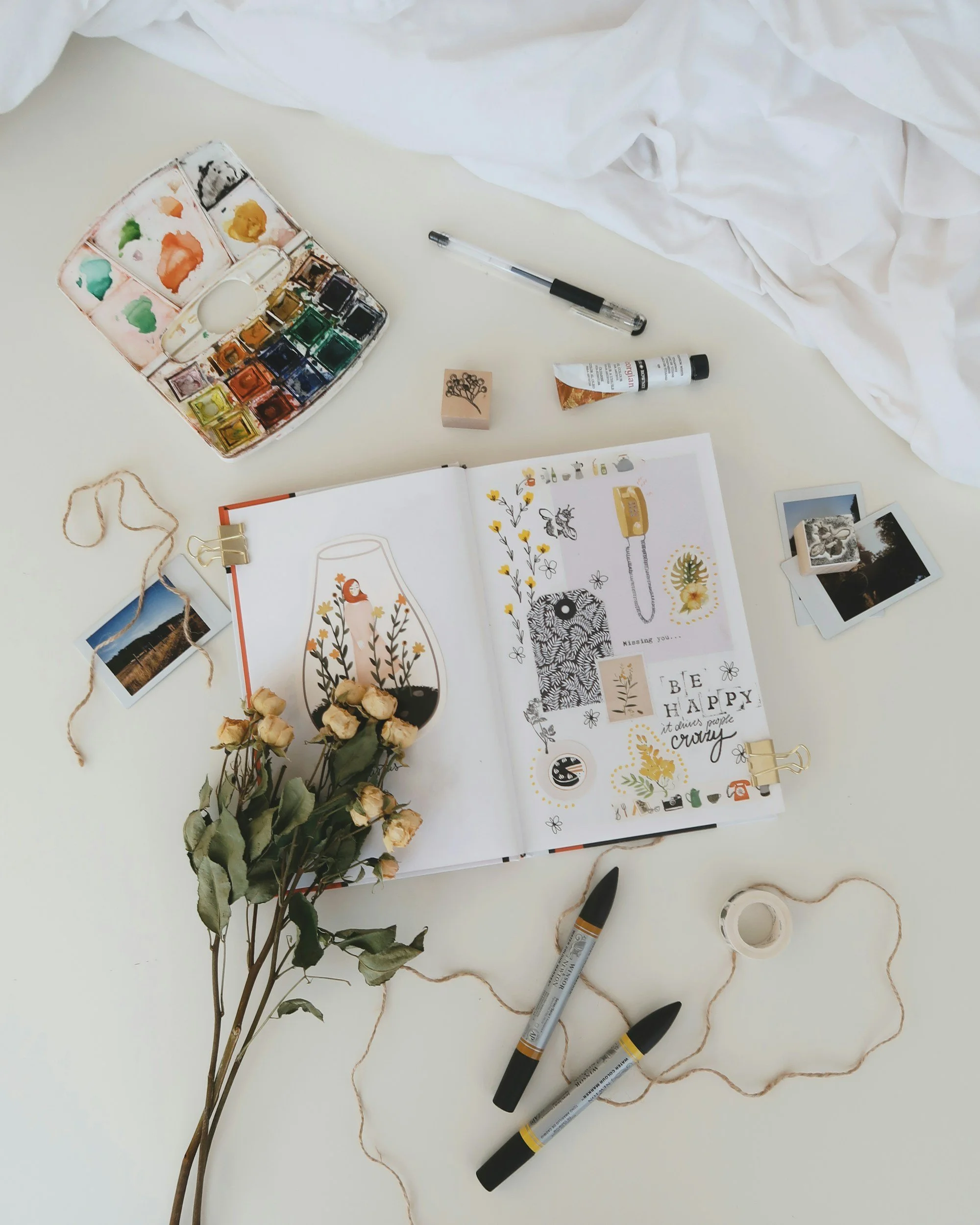
Art Journaling
A screen-free mixed-media journaling project for reflection, self-expression and creative freedom
What if a journal could become more than a notebook; a personal space for thoughts, moods, images and ideas to unfold creatively?
Art Journaling is a reflective, screen-free workshop where teenagers explore non-verbal communication through drawing, collage, mark-making and mixed media. Rather than focusing on polished outcomes, participants use visual language to respond to thoughts, feelings, observations and ideas in a way that feels personal, private and creatively freeing.
The journal becomes a space for experimentation rather than perfection; a place where images, textures, colours, fragments of text and intuitive marks can coexist naturally. Over time, participants begin to build not only pages, but a more confident relationship with their own creative process.
This is a calm, thoughtful and non-judgemental project that supports mindfulness, self-awareness and artistic independence through making.
13 to 18 years old

1 hour. Flexible sessions

Family homes (West London)
Storytelling
-
Mindfulness
-
Identity
-
Creative Reflection
-
Mindful Mixed-Media Expression
-
Storytelling - Mindfulness - Identity - Creative Reflection - Mindful Mixed-Media Expression -
A private space for creative reflection
One of the most valuable things about art journaling is that it gives teenagers a space that feels truly their own.
At an age when inner life can feel complex and words do not always come easily, a visual journal can offer another way of processing experience. It becomes a place to notice thoughts, moods or ideas without needing to explain them fully. Images, marks and colour can hold things that are difficult to articulate directly.
This is part of what makes the practice so powerful. It supports expression without forcing disclosure. Teenagers are invited to make, reflect and experiment in a way that feels safe, creative and self-directed.
For families, that often makes the project feel especially valuable: reflective without being intrusive, expressive without being pressured.
Mindful Mixed-Media Expression
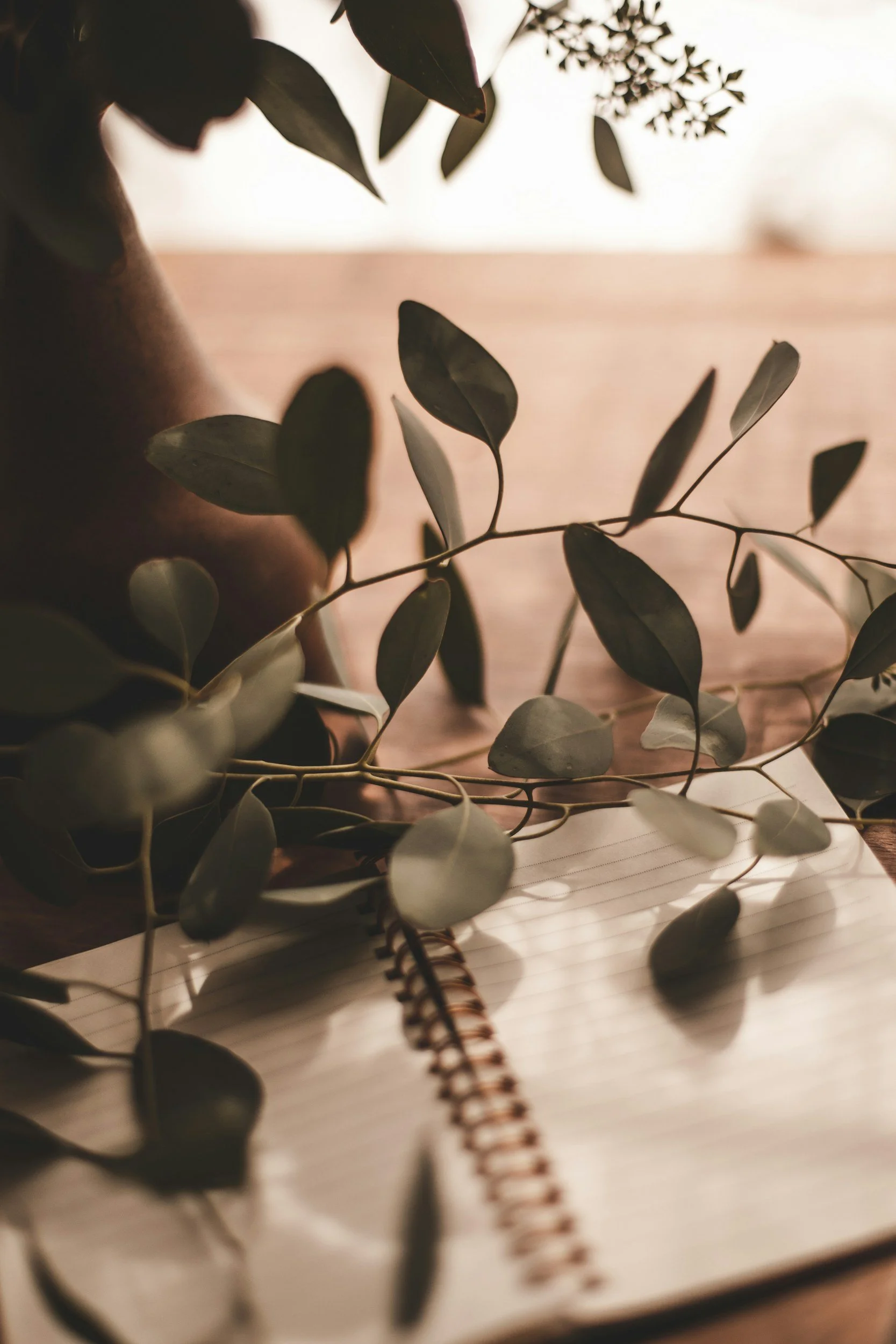
Art Journaling invites teenagers to experience creativity as something personal, ongoing and open-ended.
Rather than working towards one finished artwork, participants build a visual journal page by page, using mixed media to explore mood, memory, thought, image and feeling. Some pages may be abstract, some more narrative, some purely colour-based, some layered with words, collage or texture. What matters is not whether the page looks “finished” in a conventional sense, but whether it feels honest, exploratory and meaningful to the person making it.
This makes the workshop feel especially freeing. It removes the pressure to perform or produce something polished and instead supports teenagers in developing a more natural and personal visual language.
13 to 18 years
1 hour per session
Flexible (Single or multiple sessions)
In-person, fully screen-free
Age Group:
Duration:
Sessions:
Format:
WHAT CHILDREN WILL EXPLORE & LEARN
Sessions are guided through gentle prompts and structured exercises, while allowing full creative freedom.
The atmosphere is supportive and exploratory rather than outcome-driven. Participants are encouraged to see their journal as a personal space; not something to “get right,” but something to return to, build over time and grow with.
This balance of structure and openness helps teenagers feel supported while still allowing the work to remain deeply individual.
-
Expressing thoughts and feelings visually.
Using colour, texture and symbols to communicate ideas.
Exploring personal imagery and abstract expression.
-
Slowing down and observing internal states.
Creating in a calm, focused environment.
Developing a habit of creative reflection.
-
Collage and layering.
Doodling and expressive line work.
Combining drawing, text and texture.
Working across different materials and surfaces.
-
Exploring open-ended prompts.
Making independent aesthetic choices.
Building confidence through experimentation.
PROJECT ESSENTIALS
Materials
Materials may include:
- Blank notebooks or sketchbooks
- Drawing pencils and coloured pencils
- Markers and black liners
- Mixed-media collage materials
- Glue and scissors
- Optional paints and textured papers
Materials can be provided by MAFE, the family or the artist depending on arrangement.
Safety & Accessibility
- May involve use of scissors (used safely and appropriately)
- Materials are low-risk and adaptable
- Exercises can be simplified or deepened depending on ability
- Calm, table-based sessions
Learning Outcomes & Benefits
Participants develop:
- Creative thinking and visual experimentation
- Confidence in self-expression
- Mixed-media and collage techniques
- Fine motor and compositional skills
- Emotional awareness through reflective art-making
- An independent creative practice
Pricing
£80 per session.
WHY PARENTS LOVE IT
A PRIVATE, SCREEN-FREE SPACE FOR TEENAGERS TO REFLECT AND CREATE.
SUPPORTS EMOTIONAL EXPRESSION IN A SAFE, NON-VERBAL WAY.
ENCOURAGES MINDFULNESS, SELF-AWARENESS AND CREATIVE THINKING.
BUILDS CONFIDENCE THROUGH EXPERIMENTATION, NOT PERFECTION.
SMALL, CALM SESSIONS THAT RESPECT TEENAGERS’ NEED FOR PERSONAL SPACE.
INTRODUCES MIXED-MEDIA ART IN A RELAXED, EXPLORATORY FORMAT.

Get started today
About the Project Leader
Nissam
Architect, Illustrator & Movement Educator
Nissam is a multidisciplinary creative practitioner working across architecture, illustration, movement and language education. As an award-winning illustrator and trained architect, Nissam brings a strong understanding of structure, spatial awareness and visual storytelling into her teaching practice.
Alongside her visual arts background, Nissam is also a dance instructor, integrating movement, expression and body awareness into creative learning. For the past five years, she have delivered drawing, dance and language tutoring, supporting children and young people to develop confidence across disciplines.
Her workshops encourage holistic expression, combining visual creativity, emotional reflection and physical awareness. Nissam holds a basic DBS check and delivers sessions that are calm, adaptable and responsive to individual needs.