

City Friends: Our Animal Neighbours
A screen-free sustainability and design project about urban wildlife, coexistence and creative care
What if children could begin to see their city not just as streets and buildings, but as a shared habitat full of animal neighbours too?
City Friends: Our Animal Neighbours invites children to discover the hidden wildlife living alongside them in everyday urban spaces. Through observation, conversation and hands-on making, children explore how animals adapt to city life, how ecosystems function and how even small human actions can make a meaningful difference.
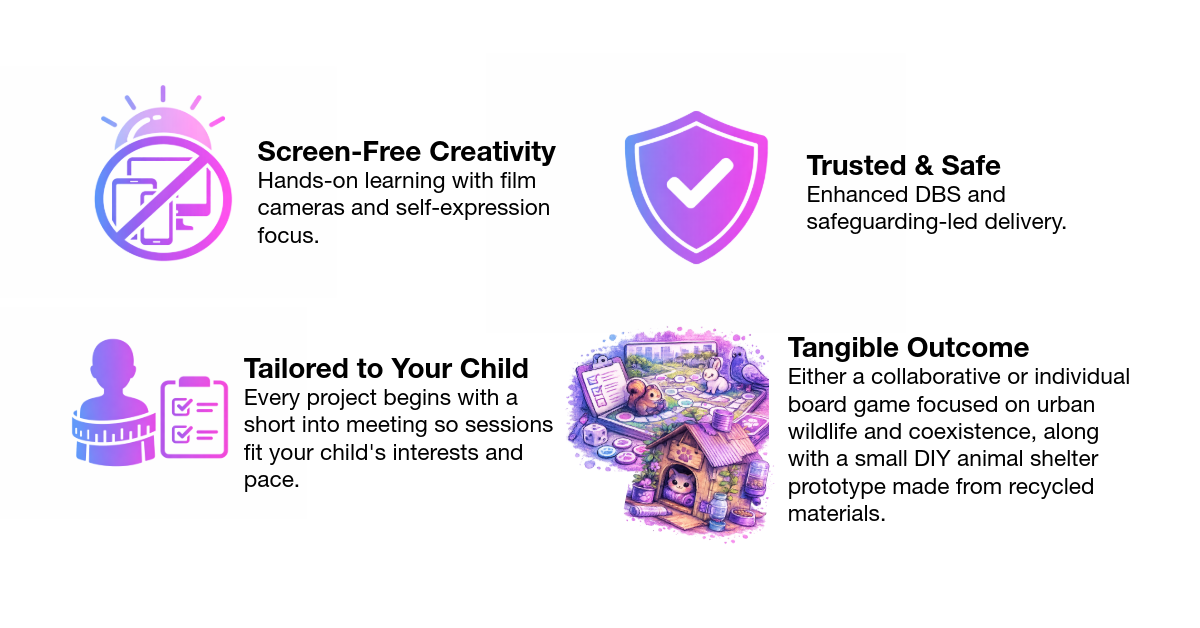
Blending sustainable design with playful creativity, this screen-free project helps children become thoughtful makers and environmental caretakers. Across a series of sessions, they design a collaborative board game about urban wildlife and build a small animal shelter using recycled materials, learning that creativity can be a powerful tool for coexistence, care and positive change.
Blending sustainable design with playful creativity, this screen-free workshop empowers children to become thoughtful makers and environmental caretakers. Over a series of sessions, they design a board game about urban wildlife and build a small animal shelter using recycled materials, learning that creativity can be a powerful tool for coexistence, care and change.


5 to 8 years old

90 min. 6 sessions
Weekends

Family homes (West London)
Relationship with Nature
-
Coexistance
-
Sustainability
-
Urban Ecology
-
Screen-Free
-
Relationship with Nature - Coexistance - Sustainability - Urban Ecology - Screen-Free -
Creativity as a tool for care
One of the loveliest things about this project is that it moves beyond learning facts and into active, creative response.
Children do not simply talk about urban wildlife, they are invited to design for it, think about it and make something in response to what they discover. Through the creation of a board game and a small animal shelter, they begin to understand that design can solve problems, tell stories and support the natural world.
This gives the project a strong sense of purpose. Children see that their ideas matter and that making can be a way of caring. That is a powerful message at a young age. It also makes the sessions especially engaging: thoughtful, but playful; educational, but deeply hands-on.
Urban Nature & Sustainable Design Workshop
This project invites children to look more closely at the life already around them.
Pigeons, foxes, insects, birds, squirrels and other urban animals are often noticed only in passing, yet they are part of the same environment children move through every day. City Friends helps children see these creatures differently, not as background, but as living neighbours with their own needs, habits and ways of surviving in the city.
Through discussion, observation and making, children begin to understand that urban spaces are also ecosystems. They explore how animals find food, shelter and safety, and how people can make choices that support rather than disrupt these fragile forms of coexistence.
This makes the project feel both imaginative and real: it begins in the child’s own surroundings and turns them into a space of discovery.
5 to 8 years
90 minutes per session
6
1 (Individual focus)
In-person, fully screen-free
Age Group:
Duration:
Sessions:
Group Size:
Format:

WHAT CHILDREN WILL EXPLORE & LEARN
Sofia uses a child-centred, design-thinking approach rooted in sustainability and real-world observation.
Sessions blend gentle discussion, environmental storytelling and hands-on making, encouraging children to explore urban nature, reflect on human impact and solve creative problems through play.
Learning is experiential, screen-free and materials-led, helping children become thoughtful makers who begin to understand their role within a wider ecological system.
This approach makes the sessions feel calm, meaningful and empowering, while remaining playful and age-appropriate throughout.
-
Identifying common city-dwelling animals.
Understanding habitats and food chains.
Exploring how animals adapt to urban life.
-
Reflecting on human impact on wildlife.
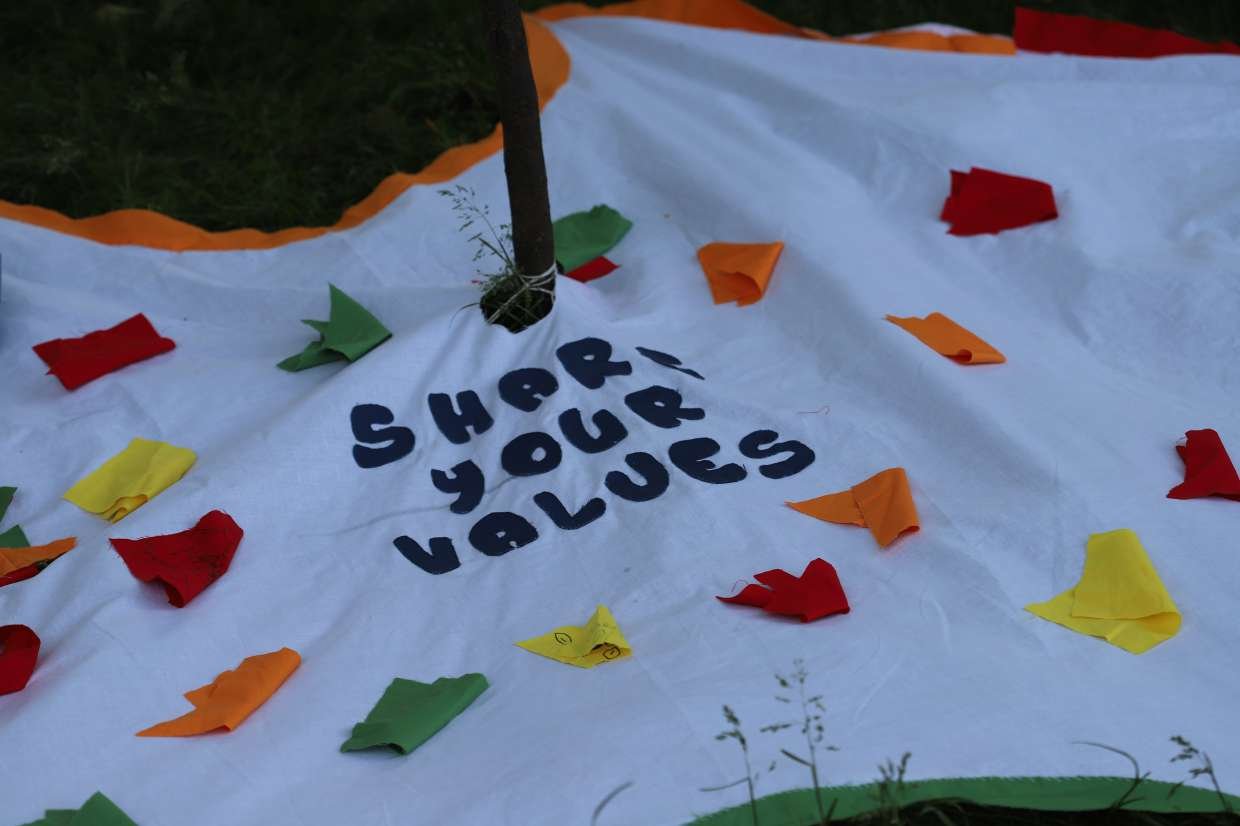
Discussing respect, empathy and shared space.
Recognising how small actions affect ecosystems.
-
Designing a simple board game about urban wildlife.
Planning and building a small DIY animal shelter.
Learning to think through materials and structure.
-
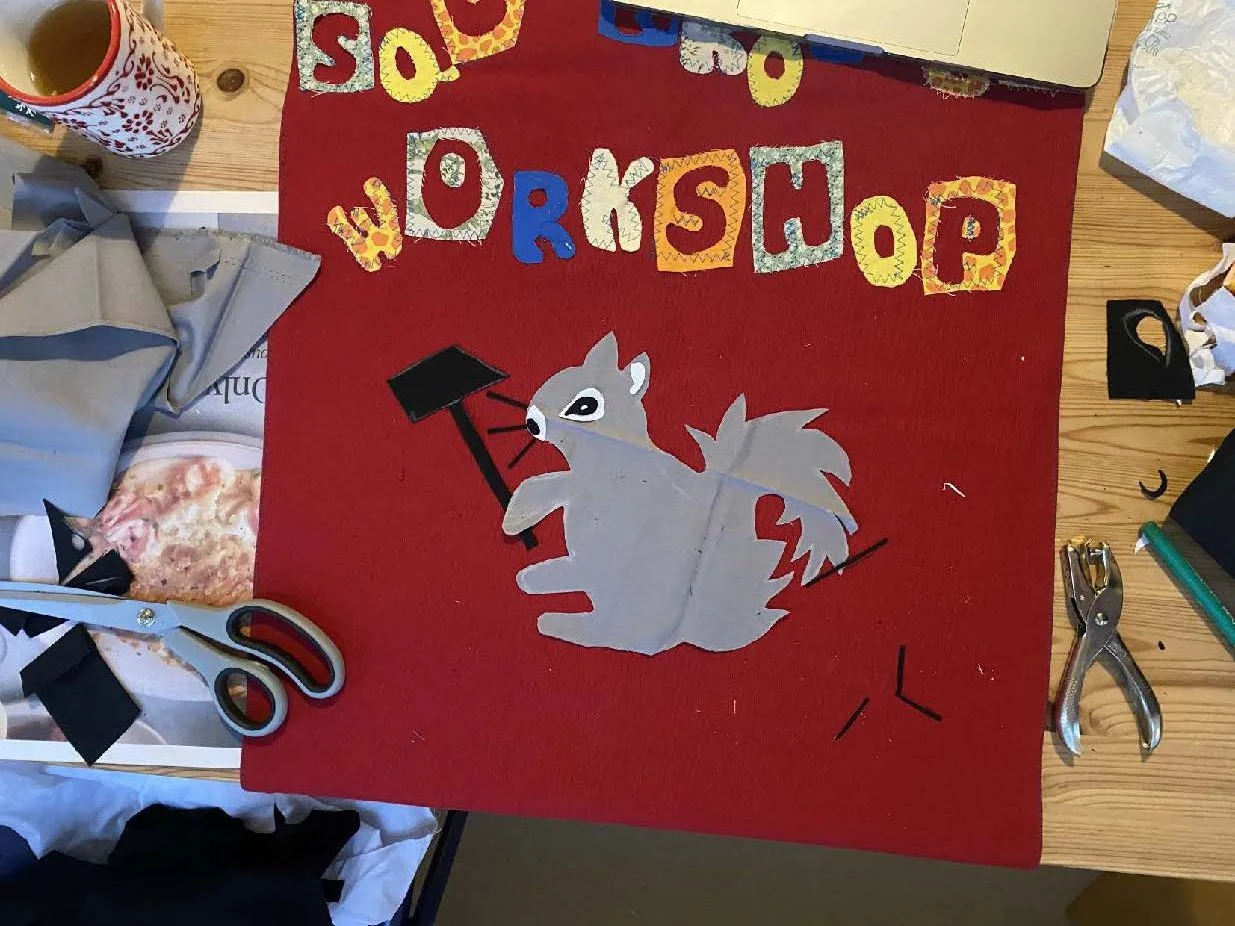
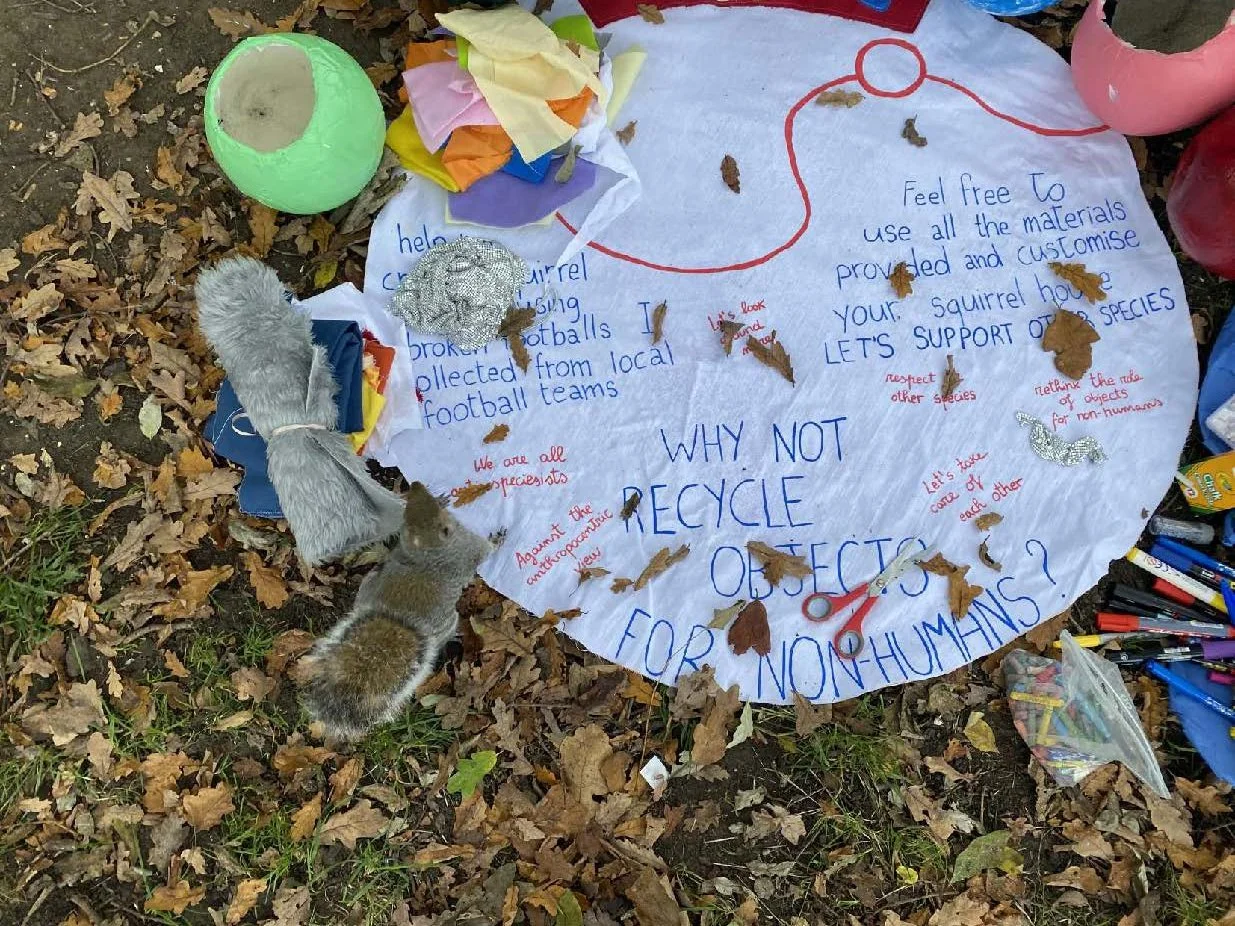
Using recycled and found materials.
Understanding upcycling and reuse.
Developing environmental awareness through hands-on work.
PROJECT ESSENTIALS
Materials
Materials may include:
- Pens, pencils, crayons, felt tips
- A3 and A4 paper and card
- Recycled materials (milk cartons, cardboard boxes, packaging, etc.)
- General arts and craft supplies
Recycled materials may be sourced from the family where possible to reinforce sustainability themes.
Safety & Accessibility
- All materials are low-risk and adaptable
- Recycled materials are reviewed for safety before use
- Activities adjusted according to fine motor ability
- Calm, structured sessions suitable for younger children
Learning Outcomes & Benefits
Participants develop:
- Environmental awareness and empathy
- Respect for shared urban spaces
- Observation skills and ecological curiosity
- Creative problem-solving
- Model-making and upcycling skills
- Early systems-thinking through game design
Pricing
From £40 per child per session (plus materials).



WHY PARENTS LOVE IT
A screen-free, hands-on learning rooted in real life.
Builds environmental awareness through creative play.
Develops empathy for animals and shared urban spaces.
Encourages critical thinking and problem-solving.
Uses recycled materials to teach sustainability by doing.
Introduces design thinking in an age-APPROPRIATE way.

Get started today
About the Project Leader
Sofia
Designer & Sustainability Educator
Sofia holds a BA in Industrial Design and an MA in Sustainable Design and Innovation, bringing a strong foundation in systems thinking, material awareness and future-focused creativity to her work with children.
She is a workshop facilitator and Co-Lead for East London Waterworks Park, where she works at the intersection of design, ecology and community engagement. Her practice centres on sustainability, coexistence and the relationship between people, materials and place.
Sofia’s sessions encourage children to observe their surroundings carefully, think critically about environmental impact and approach making with intention. She combines design-thinking with hands-on experimentation, helping young participants see themselves as thoughtful creators within a wider ecological system.
Her workshops are reflective, imaginative and rooted in real-world relevance.