
Paper sculptures
A hands-on sculptural making project using paper, drawing and collage
What can happen when a simple sheet of paper becomes the starting point for invention?
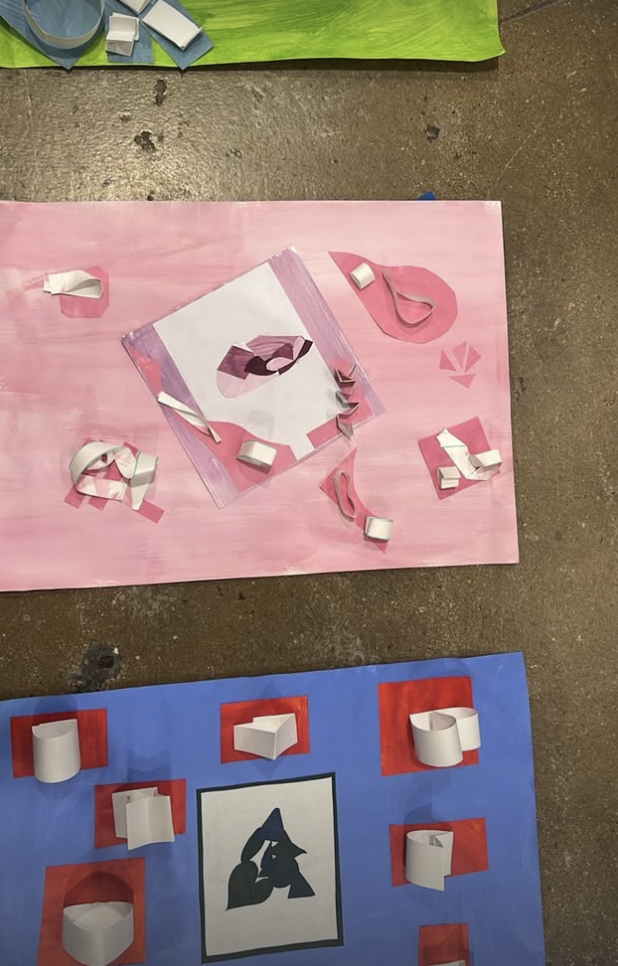
Paper Sculptures is a playful, screen-free creative workshop where children and young people explore sculpture, drawing and collage through the deceptively simple material of paper. By cutting, shaping, bending, building and reassembling, participants learn how ideas can emerge through making itself, not only through planning, but through experimentation, curiosity and discovery.
This project encourages young people to think with their hands, respond to materials intuitively and see how even the simplest resources can lead to thoughtful and imaginative outcomes. Along the way, they build confidence in three-dimensional making, strengthen observation skills and develop a more open, exploratory approach to creativity.
13 to 18 years old
1 hour. 1 session
Weekends
Sculpture
-
Drawing
-
Collage
-
Sculpture - Drawing - Collage -
Shaping creativity through making
Paper Sculptures introduces young people to the idea of designing through making, a creative process where ideas do not need to be fully planned in advance, but can grow naturally through hands-on experimentation.
Rather than beginning with a fixed outcome, participants are invited to test, build, cut, fold, arrange and transform paper into sculptural forms. This helps them discover how shape, structure, rhythm and balance can emerge directly from material exploration.
For many young people, this feels both freeing and exciting. It removes the pressure to “get it right” from the beginning and instead encourages curiosity, flexibility and confidence in the creative process.
Why paper?
Paper is familiar, accessible and often underestimated, which is exactly what makes it such a wonderful material to work with.
It can be cut, curved, twisted, layered, folded, rolled, joined and reshaped in countless ways. Because it is lightweight and responsive, it allows participants to experiment freely, take risks and discover new possibilities without fear of “wasting” materials.
This sense of freedom is central to the project. It encourages invention, play and confidence, while also teaching that strong creative ideas can begin with the simplest of materials.
This is what participants may explore:
-
Participants use cut strips and shapes of paper to create small three-dimensional forms, exploring how paper can be manipulated into unexpected structures and compositions.
-
They are introduced to the idea of making quickly in order to test ideas, discover forms and learn through experimentation rather than overthinking.
-
Once sculptures are made, participants sketch them from life, strengthening their ability to observe proportion, line, detail and form.
-
Remaining paper pieces are transformed into collages, encouraging resourcefulness and showing how every stage of the process can generate something new.
aims & benefits
Creative
Confidence in sculptural making using simple materials.
Greater willingness to experiment and take creative risks.
Introduction to designing through making rather than only planning.
Exploration of shape, form, structure and composition.
Experience moving between sculpture, drawing and collage.
Personal
More confidence in making independently.
Encouragement to think flexibly and inventively.
A sense of achievement from turning simple materials into finished work.
Joy in discovering that creativity can come from ordinary things.
Visual Understanding
Improved ability to look closely at form and translate it through drawing.
Stronger awareness of line, balance, rhythm and spatial relationships.
Development of visual problem-solving skills.
Paper.
Pencils.
Markers.
Paint
Scissors
Glue

materials
Provided by the artist.
ESTIMATED COST

from £100 for 1 session.
Get started today
About the Project Leader
MAJA
Artist, Lecturer & Designer
Maja holds an MA from the Royal College of Art, London and is a Lecturer in Contemporary Art and Design.
She supports multiple departments through her professional and academic expertise in Fine Art, Fashion, Textiles, Contemporary Design and Product Design. Maja’s work with children draws on this broad creative foundation, encouraging curiosity across disciplines while fostering confidence in making, thinking and experimentation.
Her teaching style is thoughtful, inclusive and intellectually engaging, supporting both creative freedom and skill development.